VBR-Aqua PAR Meter for Reef Aquariums
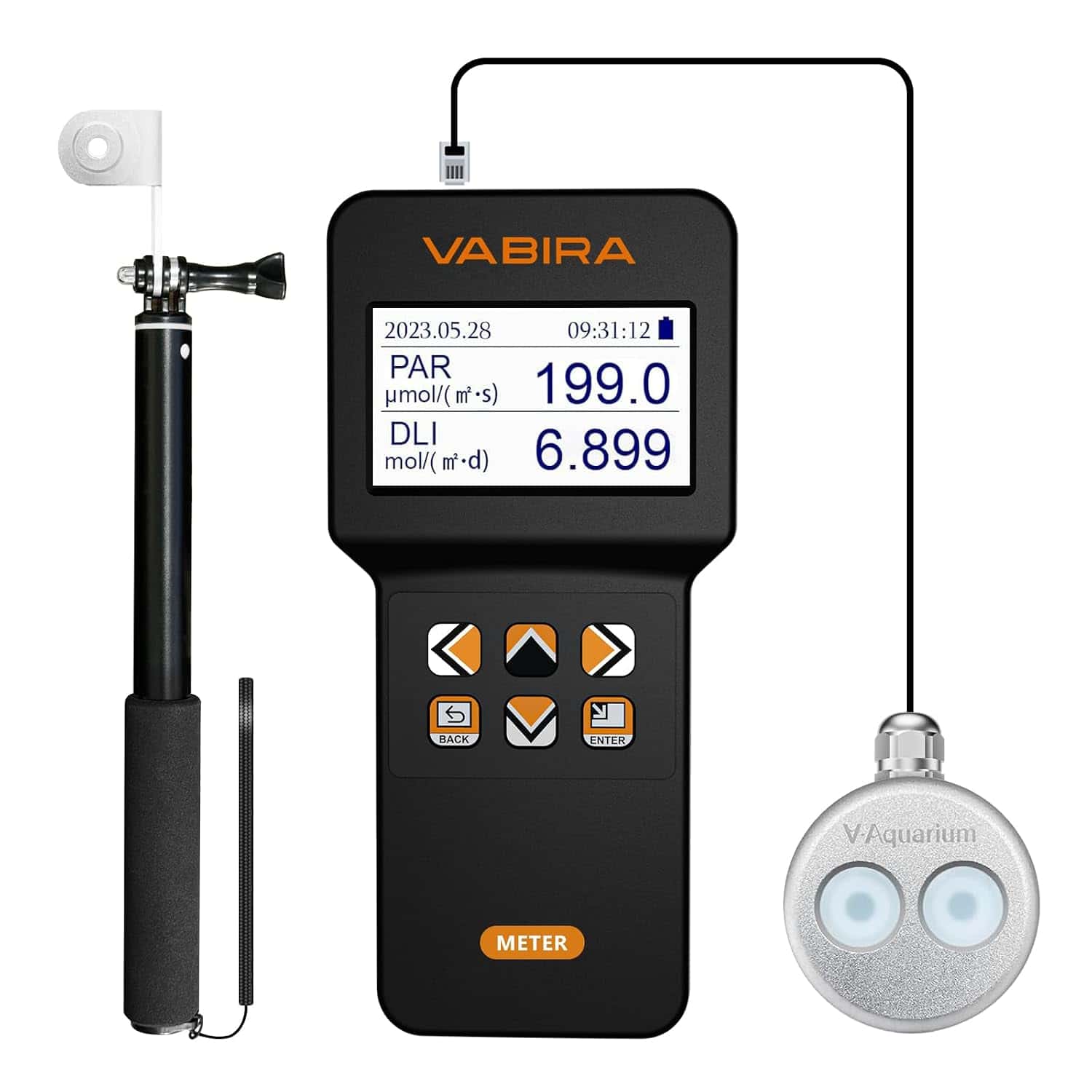
Measure PAR / PPFD where your corals actually grow. VBR-Aqua combines an IP68 waterproof sensor, separate blue / green / red readings, DLI tracking and a practical 3FT rod for repeatable measurements across different positions in the aquarium.
- PAR / PPFD
- IP68 Sensor
- Separate B / G / R
- DLI Tracking
- 400-Point Records
- 3FT Rod
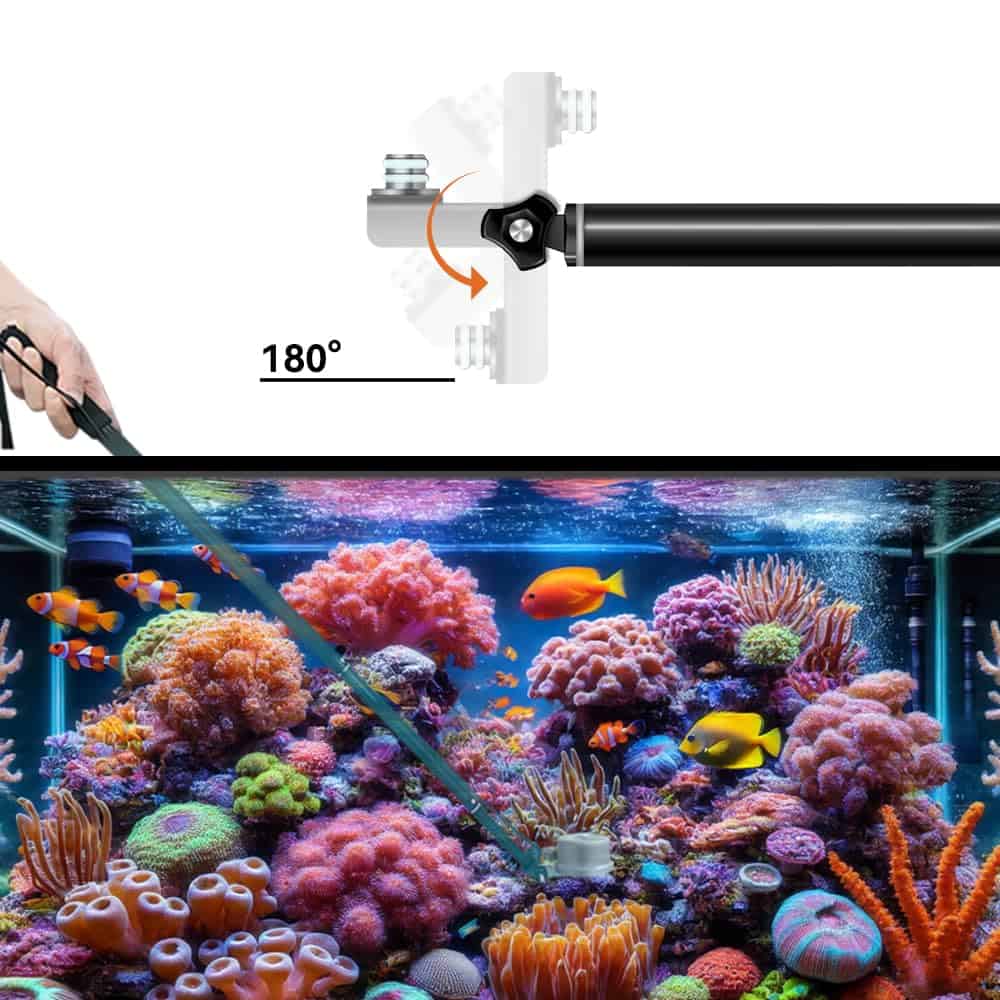
Check the light where it matters
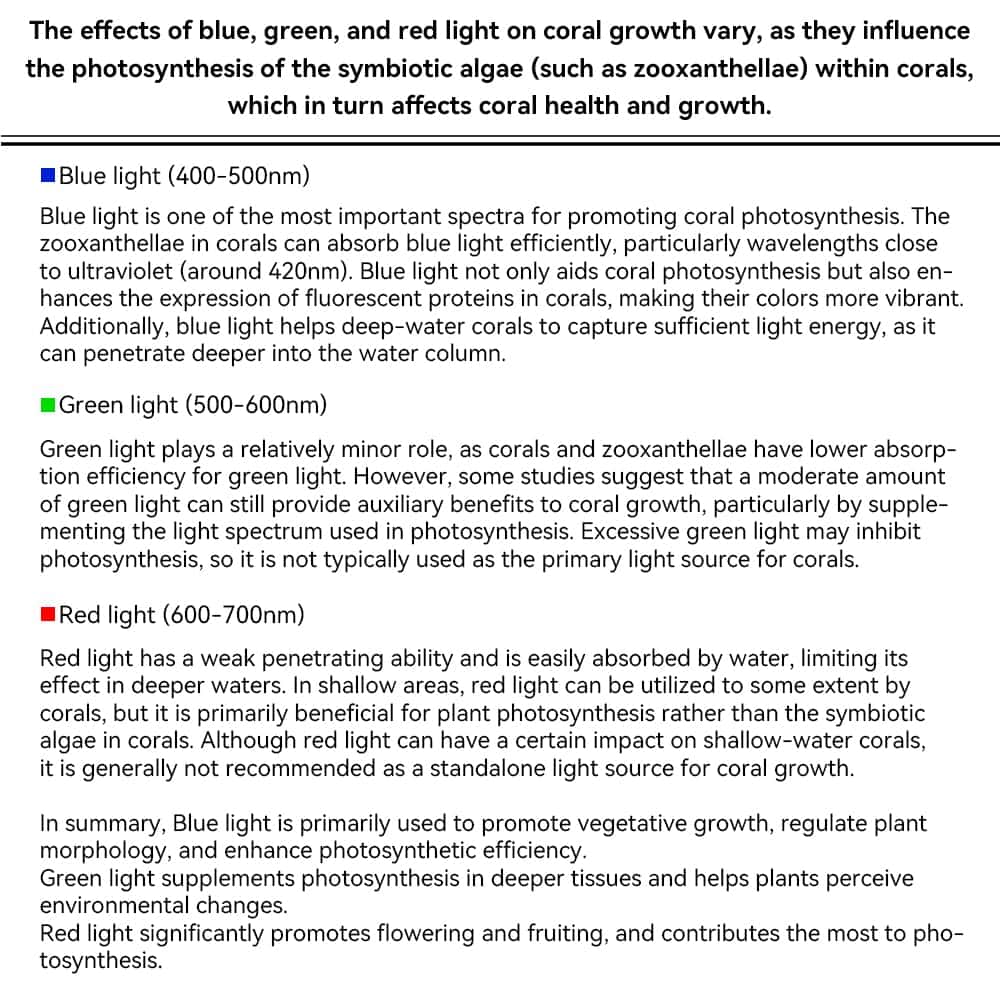
Light can change substantially from the water surface to the bottom of a reef tank, and from one coral position to another. The waterproof sensor and rod help you place the sensing surface near the exact location you want to evaluate.
- Compare multiple positions across the same aquarium.
- Measure at the same height as the coral instead of relying on fixture settings alone.
- Use repeatable positions when adjusting light intensity or coral placement.
See blue, green and red contribution separately
Aquarium lighting can combine very different spectral shapes. VBR-Aqua helps you look beyond the total PAR value by displaying separate readings for the main blue, green and red wavelength bands.
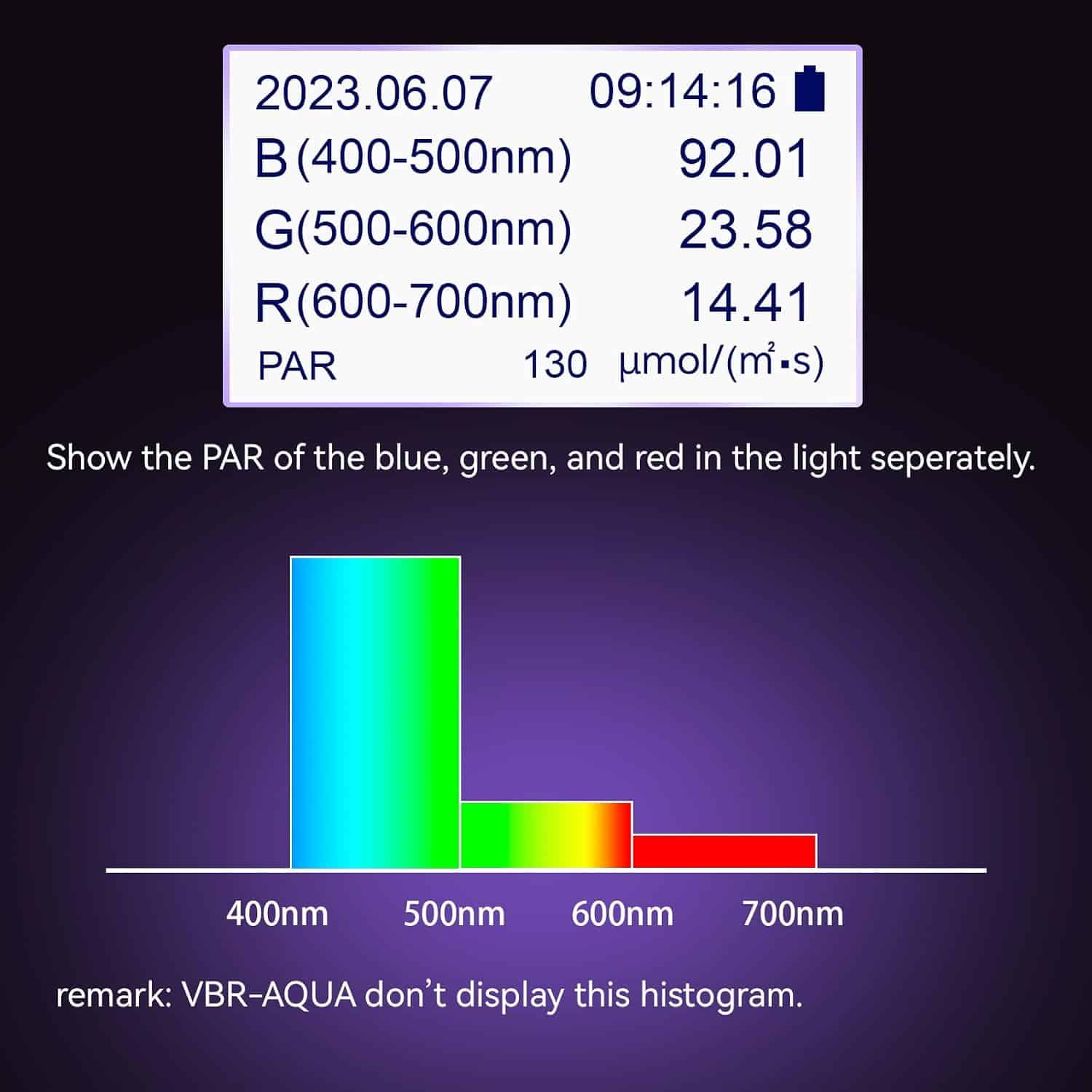
Separate spectral-band readings
Useful when comparing reef lights with different channel mixes or spectrum settings.
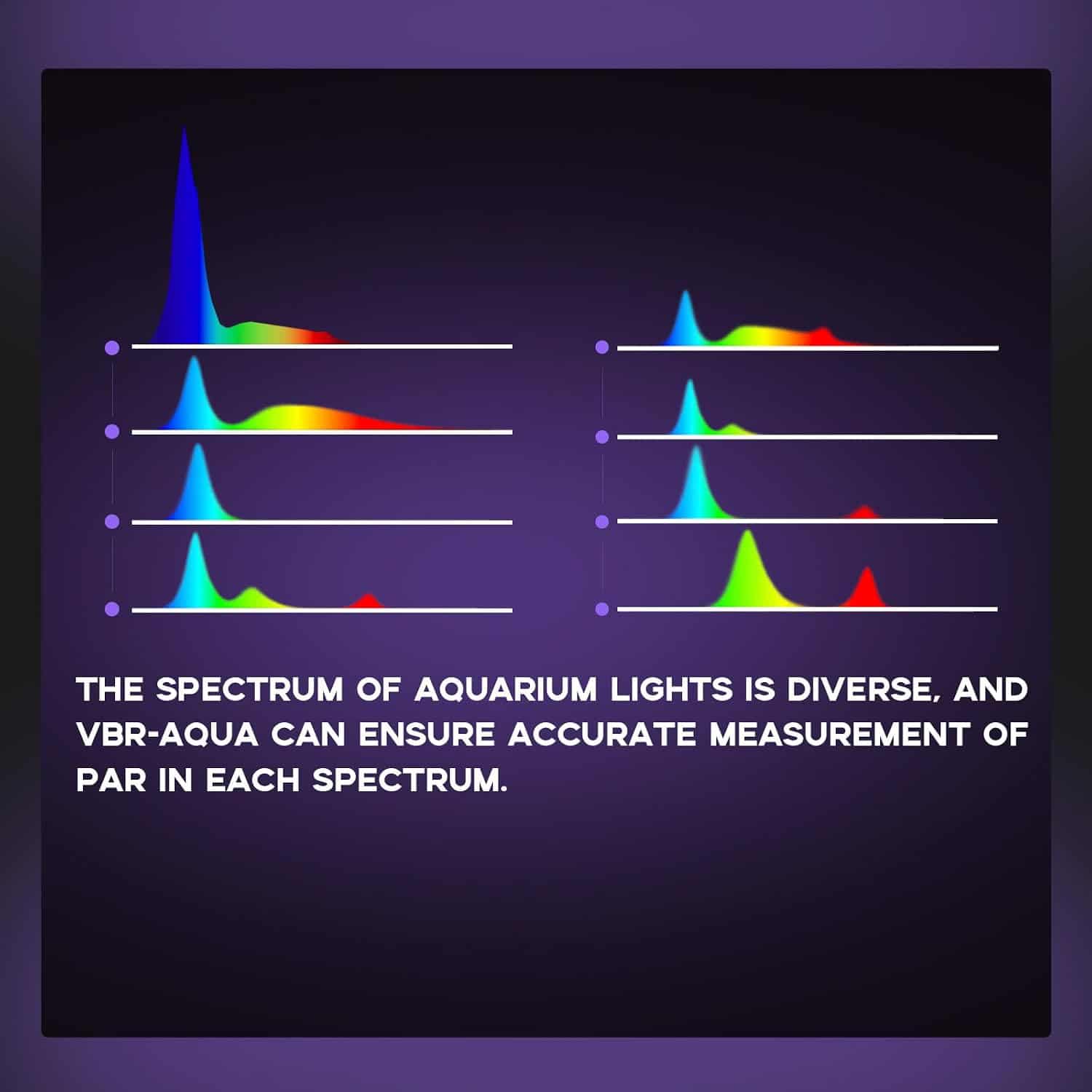
Aquarium spectra are not all the same
Different fixtures and channel settings can produce very different spectral distributions.
Understand how spectrum changes the light environment
Blue, green and red wavelengths interact differently with coral pigments, water depth and fixture settings. Use PAR / PPFD together with spectral-band information to compare lighting conditions more consistently.
Lighting needs vary by coral species, acclimation history, water conditions and fixture geometry. Use measured values as one part of the overall husbandry picture.
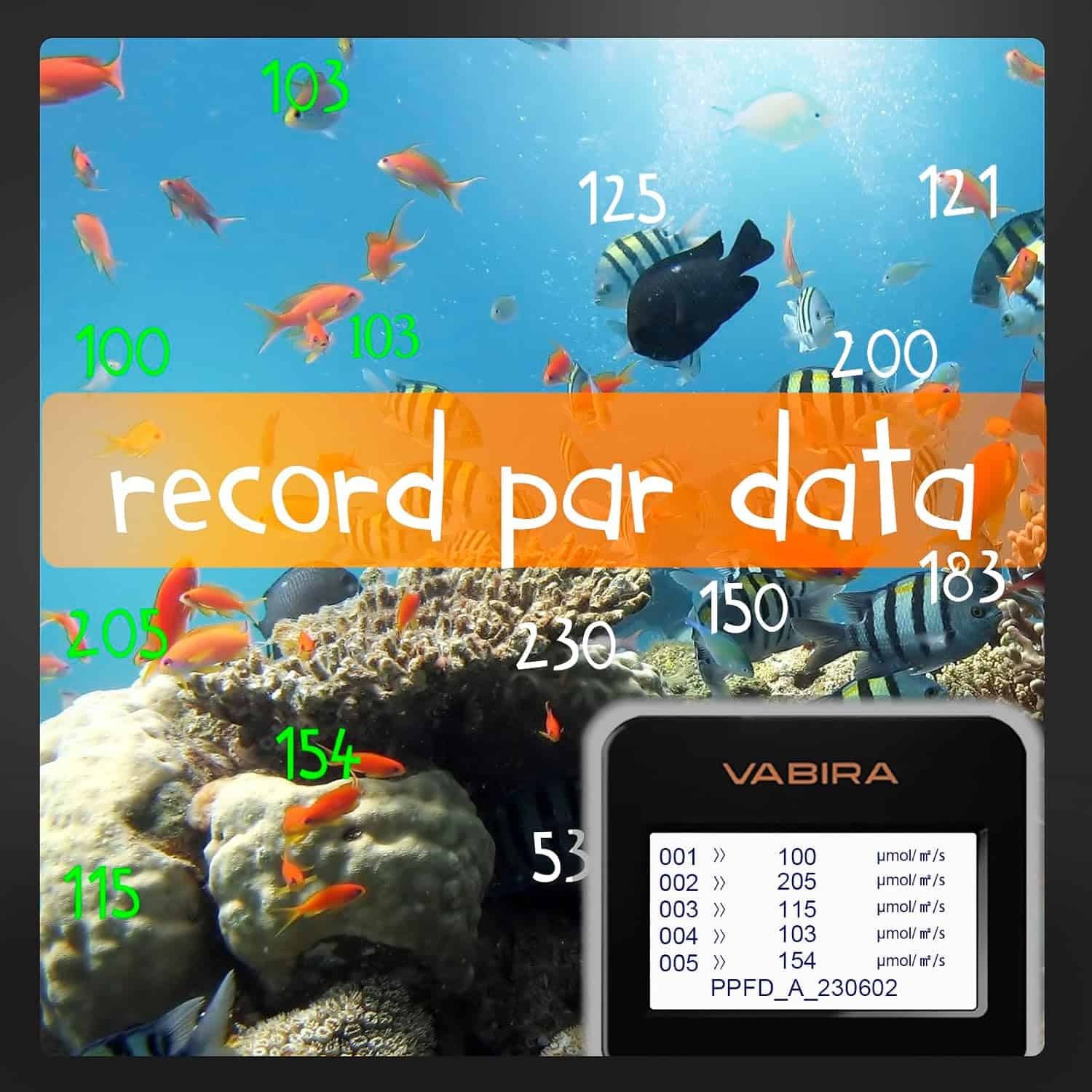
Record up to 400 PAR points
Instead of relying on one reading, record PAR values from multiple locations and depths. This makes it easier to compare the left, center and right side of the tank, or to document different coral positions.
- Store up to 400 PAR readings.
- Compare locations before and after adjusting the fixture.
- Create a repeatable reference for future coral placement.
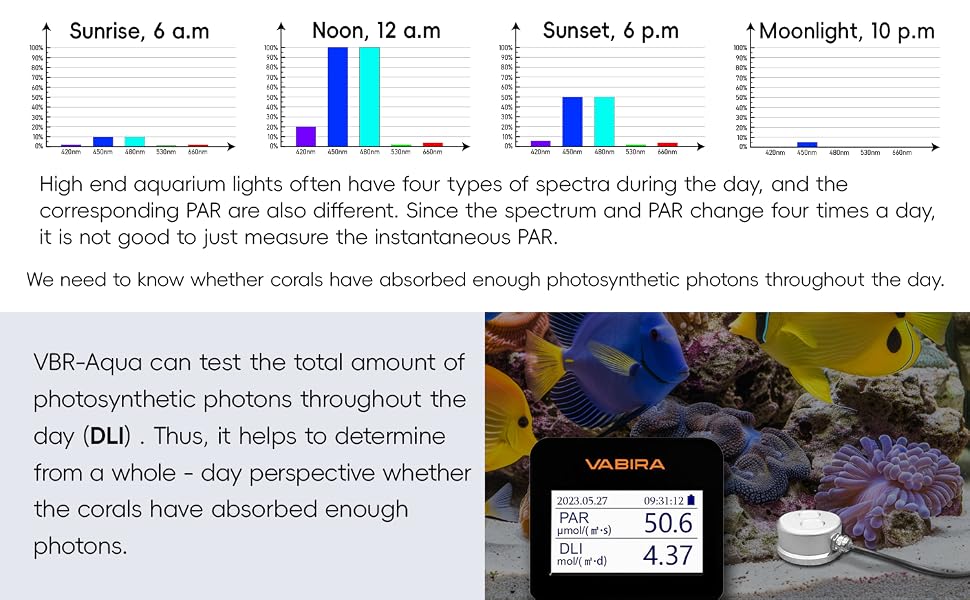
PAR is the moment. DLI is the day.
A single PAR reading shows instantaneous light intensity. DLI tracks accumulated photosynthetically active light over time, helping you compare different photoperiods and lighting schedules.
Why underwater readings can differ between meters
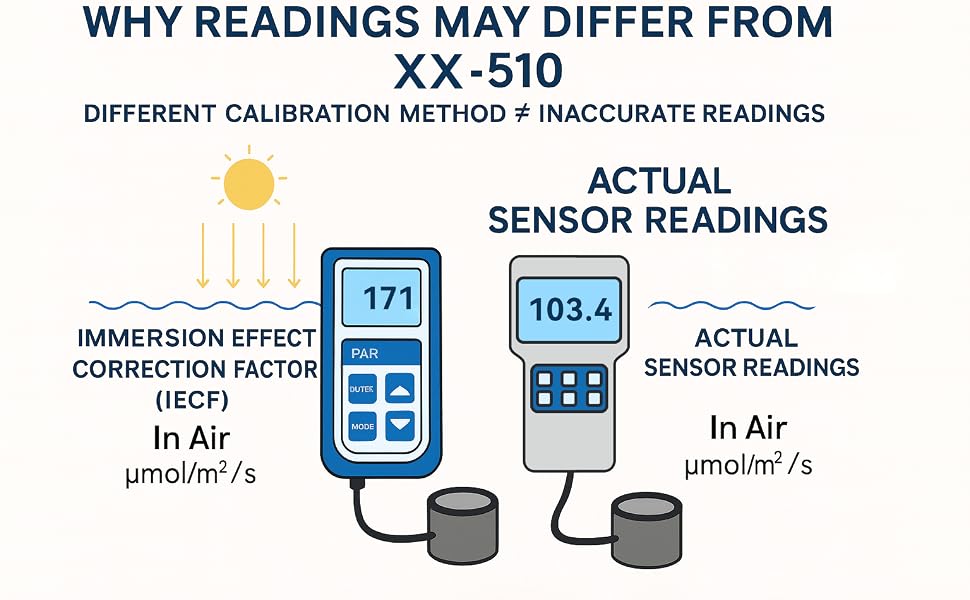
VBR-Aqua reports the sensor's direct reading and does not apply an immersion-effect correction factor. Some meters use a different correction method, so two instruments can show different underwater numbers even when each is operating according to its own measurement method.
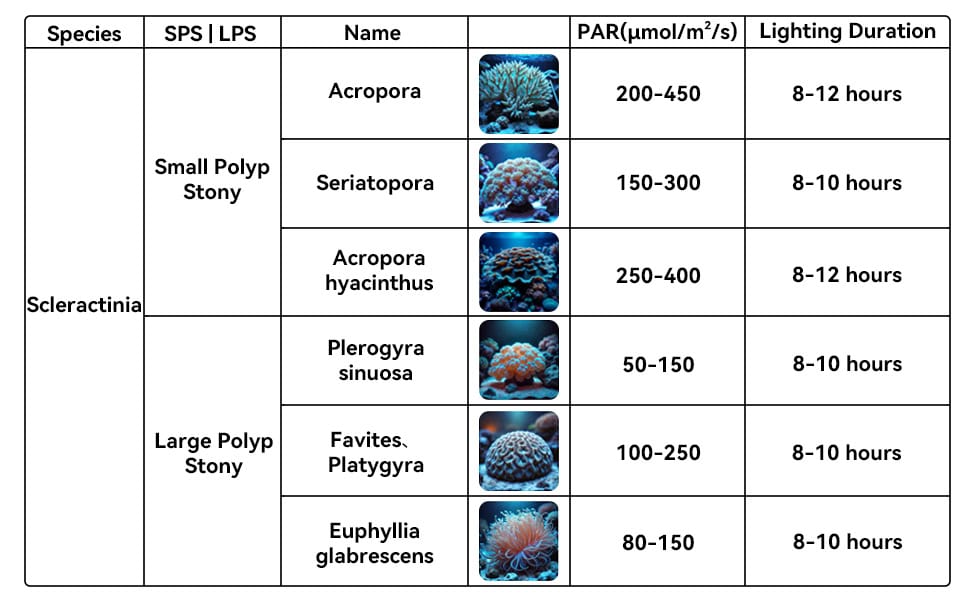
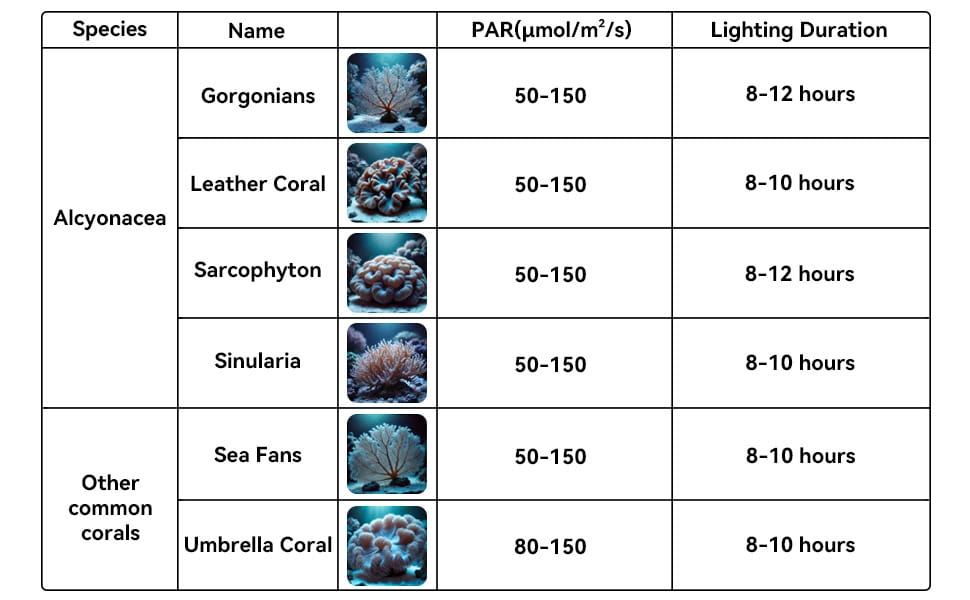
PAR reference ranges for different corals
These charts provide practical starting references for several coral groups. Actual requirements can vary with species, acclimation, water quality, spectrum, placement and photoperiod.
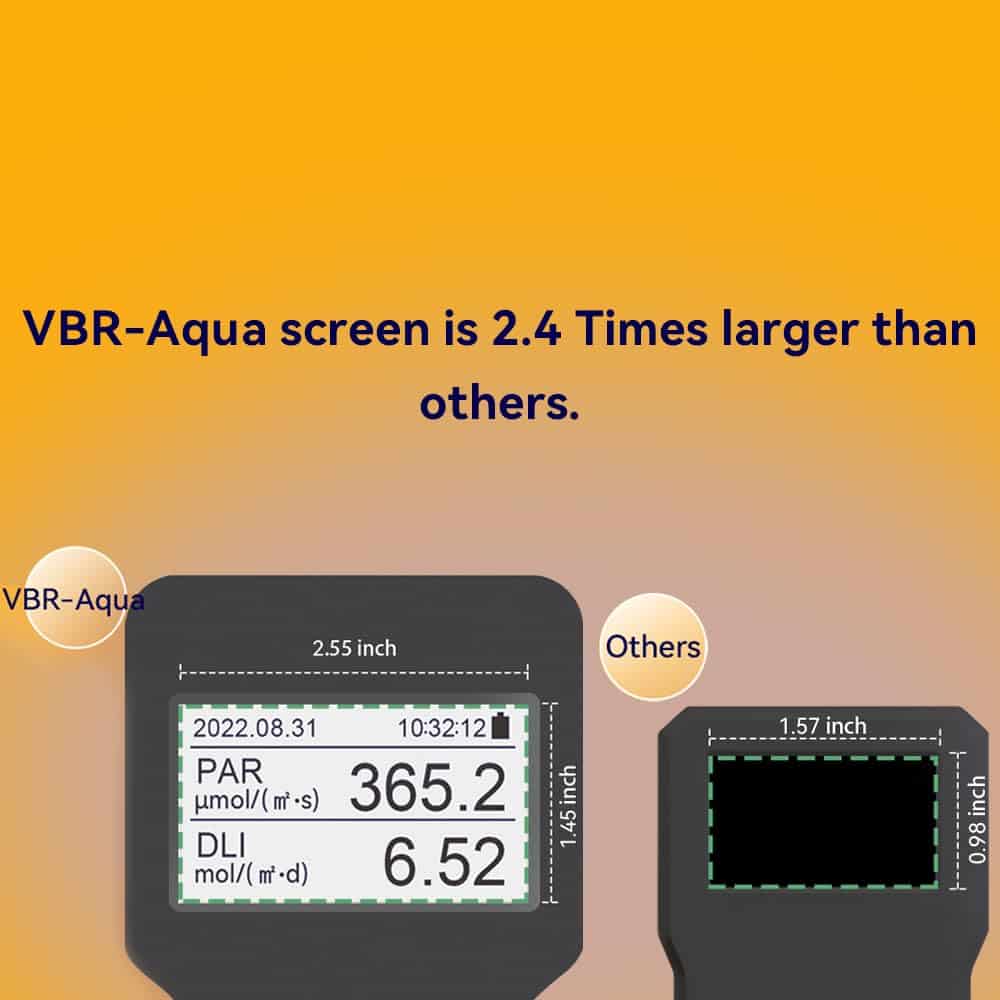
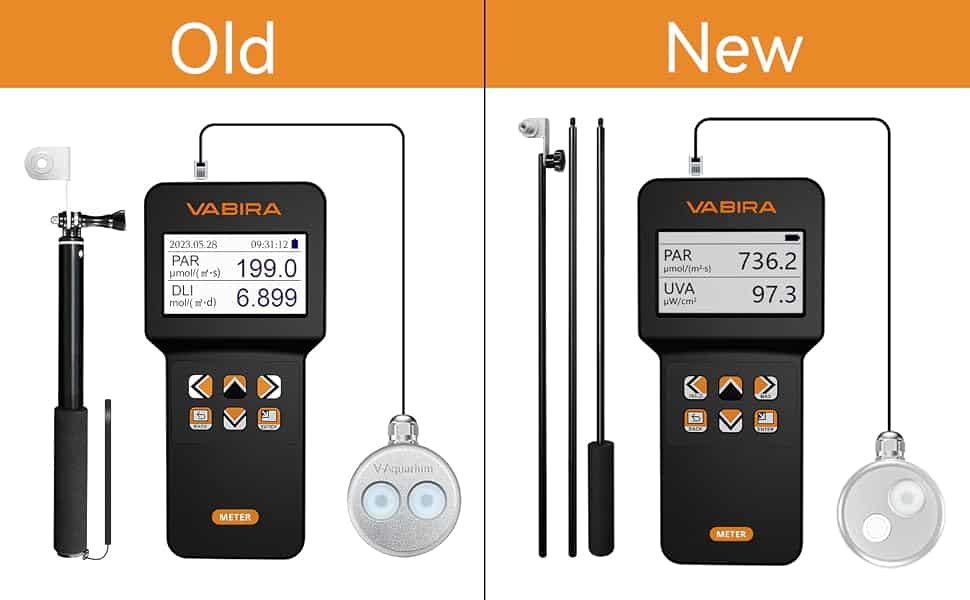
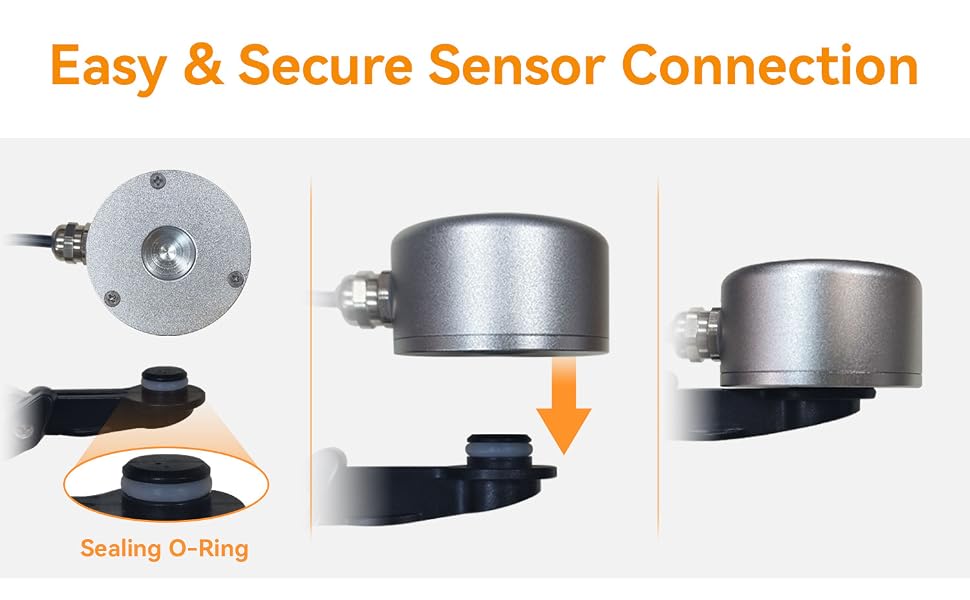
Large display, updated rod and secure sensor connection
The current hardware focuses on easy reading, repeatable placement and a secure connection between the sensor and rod assembly.
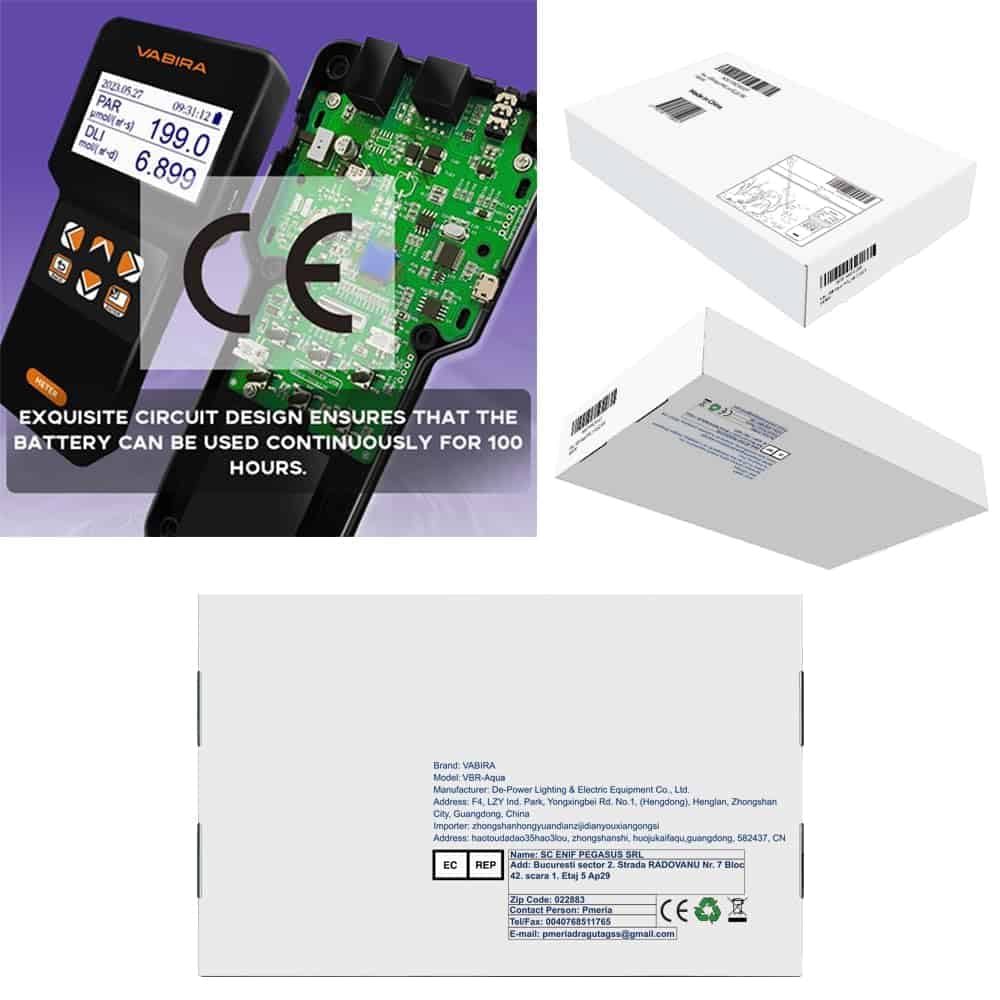
Designed as a dedicated aquarium PAR meter
VBR-Aqua combines the handheld meter, waterproof sensor and rod system in one measurement kit. The meter runs on three AAA batteries for portable use and can also be used with an adapter for longer continuous measurement sessions.
- Portable handheld design.
- Three AAA batteries for untethered measurements.
- Adapter support for continuous testing.
VBR-Aqua key specifications
How to measure PAR in a reef tank
Use a consistent method so readings can be compared over time.
Use normal light settings
Run the aquarium fixture at the spectrum and intensity settings you normally use.
Place at coral height
Position the sensor at the same depth and location as the coral or area you want to evaluate.
Keep the sensor stable
Keep the sensing surface oriented consistently and minimize water movement around the sensor while reading.
Map several positions
Record multiple points across the tank instead of making decisions from a single location.
VBR-Aqua questions
What is VBR-Aqua designed to measure?
VBR-Aqua is designed for PAR / PPFD measurement in aquariums and reef tanks. It also supports DLI tracking and separate blue, green and red spectral-band readings.
Can the sensor be used underwater?
Yes. The sensing head is designed as an IP68 waterproof aquarium sensor for in-tank measurement.
Why can VBR-Aqua show a different underwater value from another meter?
Measurement methods can differ. VBR-Aqua reports direct sensor readings without applying an immersion-effect correction factor, while some meters use a correction method. Compare meters only after confirming how each one treats underwater readings.
Can I save PAR readings from different positions?
Yes. Up to 400 PAR records can be stored, which is useful for building a repeatable light map of the tank.
What is DLI used for?
DLI represents accumulated photosynthetically active light over time. It complements an instantaneous PAR reading when comparing photoperiods or daily lighting schedules.
Where can I get VBR-Aqua?
Use the purchase button on this page to view the current available purchase option.
Measure the light your reef actually receives.
Use VBR-Aqua to compare positions, spectrum settings and daily light in your aquarium.